Dune Grasses Play an Essential Role in Shaping and Protecting Coastal Environments
By: Gilda Krieger
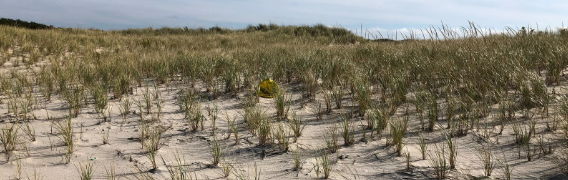
Photo Credit: Micaylee Cassidy
Hardy plants such as American Beachgrass and Broom Sedge are specially adapted to thrive in sandy, windy, and salty conditions where many other species cannot survive. Found along beaches and coastlines around the world, dune grasses contribute directly to the formation and stability of sand dunes.
One of the most important features of dune grasses is their dense and extensive root systems. Their roots spread both vertically and horizontally beneath the sand, creating a network that traps and holds loose sediment in place. As wind carries sand inland from the beach, the blades of the grass slow the movement of air and cause sand particles to settle around the plants. Over time, increased sand accumulates, gradually building mounds that develop into dunes. The underground roots and rhizomes continue to anchor these growing formations, making them stronger and more resilient to movement.
Dune grasses also serve as a natural defense against coastal erosion caused by storm surges. During storms and periods of high tide, dunes act as protective barriers that absorb wave energy before it can reach inland areas. Because these grasses stabilize the dunes, they reduce the amount of sand washed away by water. This protection helps preserve beaches, prevents erosion, and reduces damage to nearby ecosystems and human communities. By creating and maintaining dunes through their dense root systems, dune grasses are a vital part of coastal resilience and long-term shoreline protection.