Pride in Biodiversity: Local Birds
By: Melissa Papalcure
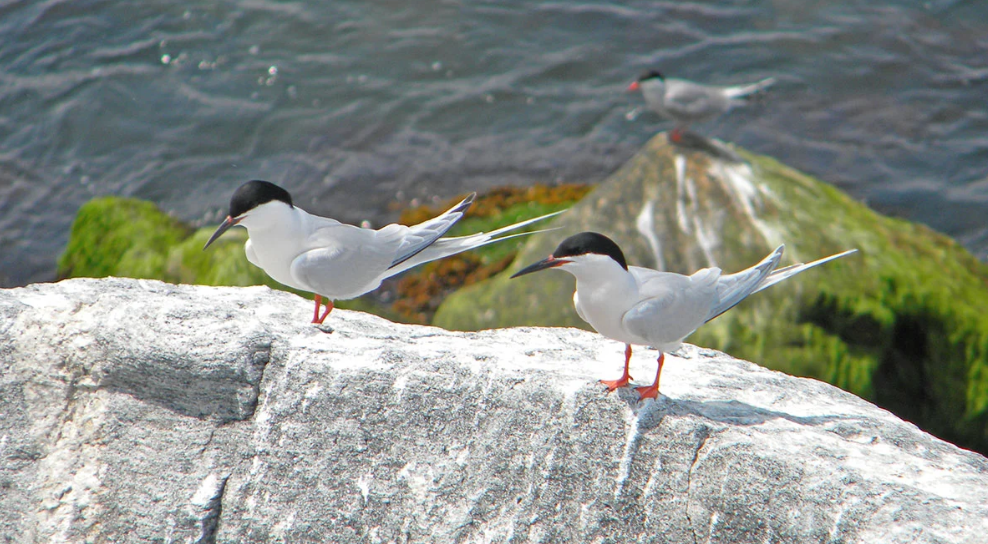
Photo: Two Roseate Terns on Rock, Great Gull Island 7/11/12 by USFWS
For Pride Month, Jones Beach Energy & Nature Center featured a display celebrating nature’s biodiversity.
One of the birds highlighted, the Red-necked Phalarope, is a long-distance shorebird that has been spotted recently at the boat basin! Female phalaropes are larger than males, their plumage is more colorful, and they are fiercer than males. During the breeding season, female phalaropes court males, lay their eggs in clutches, and leave him to handle all the parental responsibilities, taking no part in it themselves. Some females will continue to find other mates, while each male phalarope is tasked with incubating the eggs and raising the young.
Other shore birds like the rare and endangered Roseate Tern exhibit similar behavior. Over 30% of North America’s breeding pairs migrate to nest on Great Gull Island at the eastern end of the Long Island Sound. Often females outnumber males, and those unable to find a male mate will pair with other females to establish territory, nest, and raise young cooperatively.
Female Eider ducks rely on a communal rearing system known as a "crèche," where multiple females defend and care for young together. Both females in a pair contribute eggs to a shared nest. Eiders are known to breed and incubate ducklings cooperatively in trio and quartet bonds where each hen has a distinct role.
Nature continuously demonstrates how diverse and complex breeding behaviors can produce positive social bonds and successful reproductive outcomes for bird species.