Cold Stunning in Sea Turtles
By: Sarah Gullo
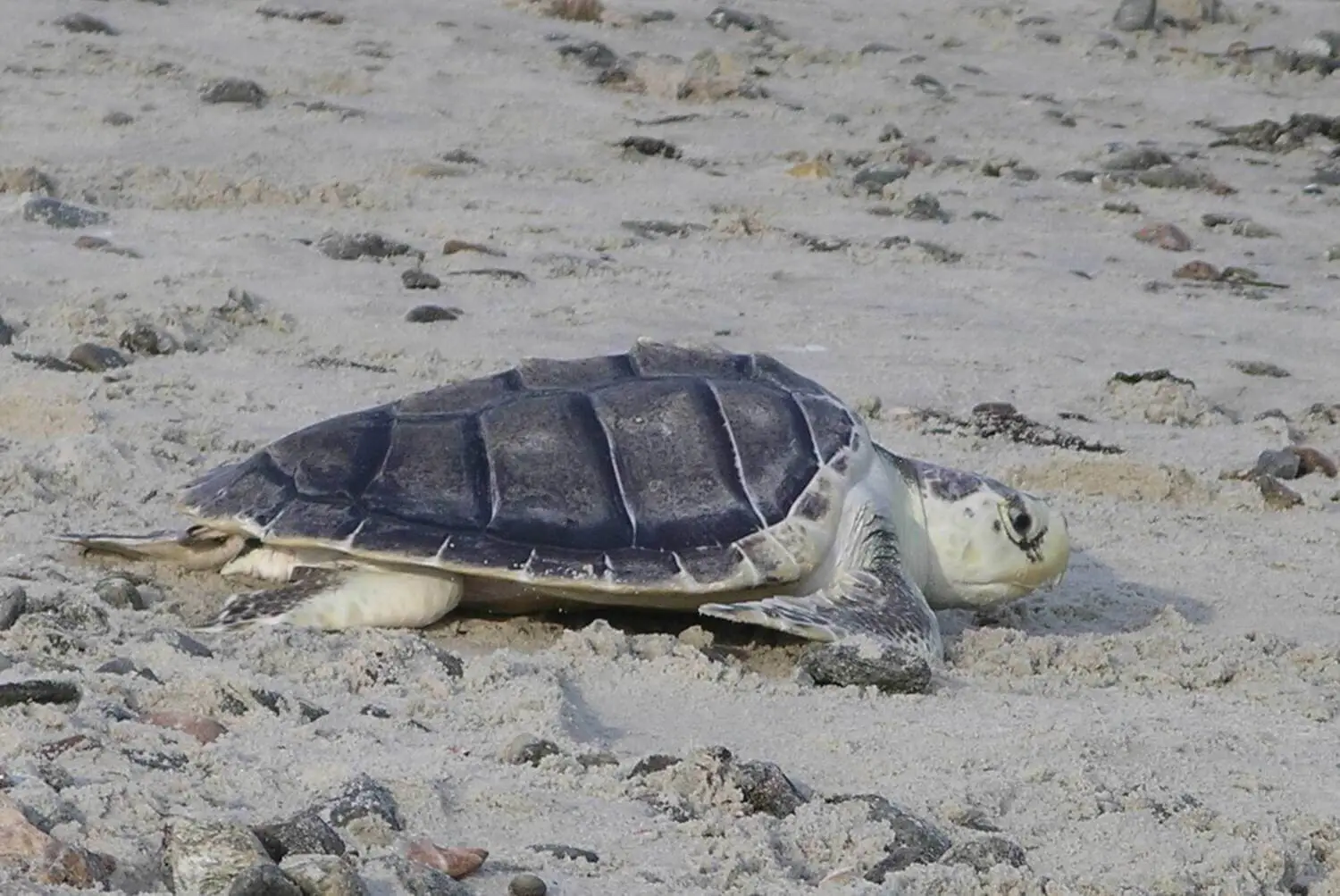
A Kemp’s ridley sea turtle stranded on a beach due to cold stunning. (Credit: New York Marine Rescue Center)
As fall arrives and ocean temperatures cool, many species like sea turtles begin their journey south to seek warmer territories. Sea turtles are ectothermic - meaning they rely on the temperature of their environment to regulate their internal body temperature. As a result, this makes them particularly sensitive to changes in ocean temperatures.
Earth’s rapidly changing climate is affecting seasonal ocean temperatures and causing water to cool at a faster rate than usual during the fall to winter months which can have devastating effects on migratory species like sea turtles. When temperatures start to drop below 55° F, some turtles undergo a condition called cold stunning. This causes the turtles to become lethargic, making it difficult to swim and eventually leading to the animals washing ashore. Time spent on shore can delay the turtle’s southern migration, which then further debilitates turtles by exposing them to colder temperatures. Long Island lies perpendicular to the mainland’s coast which is especially difficult for lethargic sea turtles to circumnavigate, leading to many washing ashore on our northern beaches.
If you come across a cold stunned sea turtle on the beach, you should IMMEDIATELY call the New York Marine Rescue Center’s (NYMRC) 24-hour stranding hotline at (631) 369-9829. Do not attempt to warm the turtle, as it can cause further stress to the turtle’s health. Do not put the turtle back into the water. If you are interested in volunteering and getting involved in helping cold stunned sea turtles, you can sign up for a training hosted by the NYMRC.